

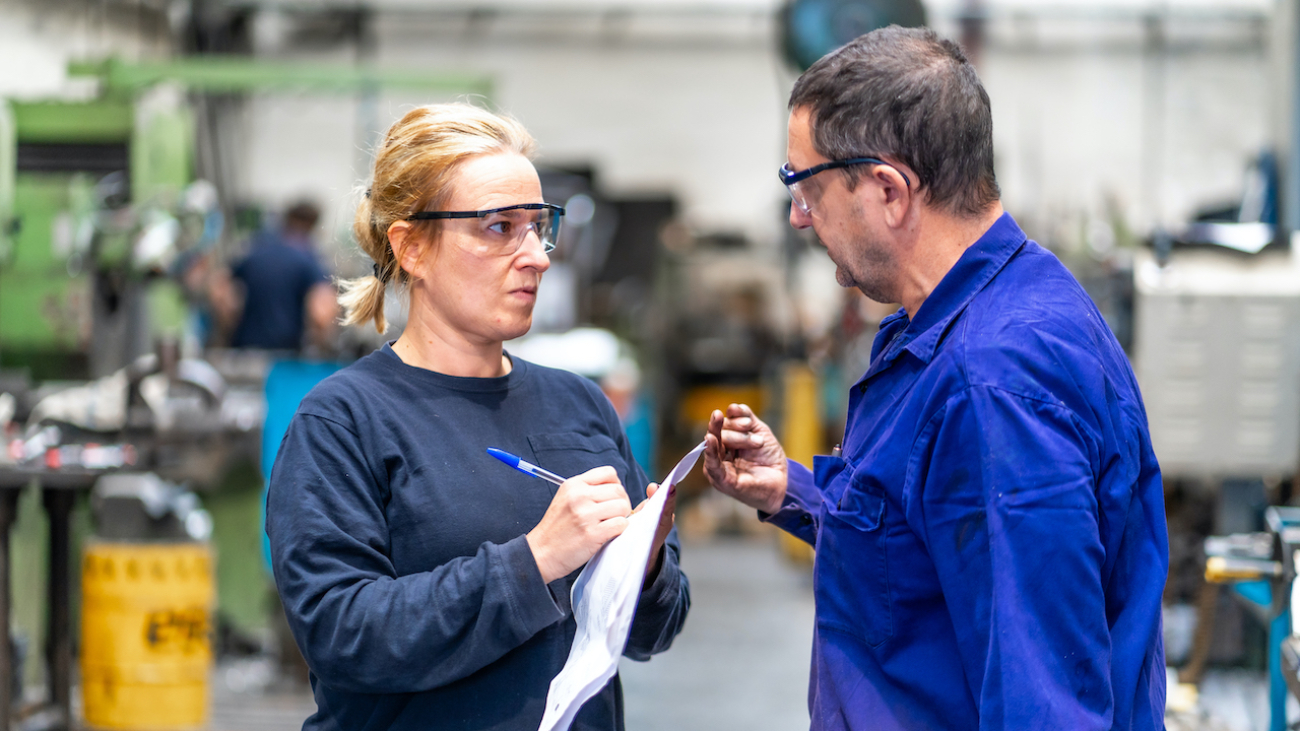
Audiovisual Onboarding for Businesses: How Videos Can Improve Training for Your New Employees.
A new employee’s first day on the job is a mix of excitement, a lot of information, and… quite a bit of mental effort and confusion.
New coworkers whose names you forget within five minutes, new tools, passwords, procedures, company culture, products, clients… And someone trying to explain it all to you while you struggle to remember what you can.
More and more companies are looking for ways to make this process easier, and audiovisual onboarding has become one of the most useful tools for achieving this. It doesn’t replace the people who guide and train the new employee, but it ensures that much of the information is available right from the start, accessible as many times as needed.
Onboarding begins before the new hire even starts the job
Imagine someone starting a new job on a Monday. Even before meeting their team, they might receive a series of short videos explaining the company, its origins, its corporate culture, how it operates internally, and what to expect during their first few days.
Then, there are other videos covering different topics: how to use the company’s tools, how an internal procedure works, how to present a product, and so on.
The difference between a series of short training videos and handing the person a 50-page manual to read and learn from is obvious: no one remembers a 50-page manual.
Video lets you see and hear how things are done, not just read about how they should be done. And it has a clear advantage: it doesn’t rely on someone having to repeat the same explanation over and over again, which takes time and patience.
A good training video isn’t just a person talking in front of a camera
This is where real audiovisual production comes into play. It’s easy to think that all you need to do is put a camera in front of an employee and press “record.” But if the goal is for that video to be used for months or years, it’s worth treating it for what it really is: an audiovisual product.
Good framing, even lighting, clear audio, and editing designed to make the content easy to understand completely transform the experience. The visuals aren’t there for decoration; they’re there to aid understanding: if you’re explaining software, combine the instructor with a screen recording instead of forcing the employee to guess where to click; if you’re explaining a manufacturing process, show it. Animations, videos, photos, text…
Think About the Learner, Too
A training video shouldn’t just be a recorded, narrated PowerPoint presentation. People lose focus in front of a screen just as they do anywhere else, so length and pacing matter.
Instead of a single one-hour segment, it usually works much better to break the training down into short segments: one video to introduce the company, another for day-to-day tools, another for the sales process, another for internal policies, and another for frequently asked questions.
This is the concept of audiovisual microlearning, applied to a very specific need: to enable new employees to learn progressively and revisit what they need, when they need it, as many times as they need to.
An investment that keeps paying off even after the recording is finished
Many companies discover, after producing their first training content, that the video doesn’t disappear once the recording is finished and it’s been played for the first time: it’s reused with every new hire, can be updated when a procedure changes, and can even be adapted into other languages. And it frees up time and resources for the company, because the training manager no longer has to repeat the same explanation over and over again and can devote that time to something more important: supporting and assisting the new employee and addressing their specific questions.
Training videos don’t replace people. They make their jobs easier.
This is the most important point. A good audiovisual onboarding system isn’t meant to replace in-person employee training. On the contrary: videos handle the information that can be explained in a standardized way, so that people can devote their time to what truly requires a human touch.
The welcome, the conversation with the manager, getting to know the team… those things require people. But explaining for the fifth time how to use a tool can be perfectly handled with a video.
How We Can Help You at Lucentum Studios
At Lucentum Studios, we produce audiovisual training content designed to help companies explain their processes clearly, professionally, and engagingly. We handle the filming—whether in our studio or at your own facilities—incorporate graphic elements and animations, and prepare different versions of the content depending on where it will be used. If you need to bring it to other markets, we also handle localization, dubbing, and subtitling in any language.
Because training a new employee shouldn’t mean dumping all the information on them at once and hoping they’ll remember half of it (if they’re lucky). Sometimes, the best way to teach how a company works is simply to show it through audiovisual content. Content that can be replayed for learning, reference, and review at any time.
If you’re thinking about improving your company’s onboarding process through audiovisual content, tell us your needs, and we’ll turn it into a customized project for your company.